Drishta
I had a different take.
This morning I realised my approach to drishta had been wrong.
In the Ashtavakra Gita, drishta is the observer — the seer behind the body and the mind. Not the one having the experience. The one aware of the experience. In the dialogue, the sage Ashtavakra tells King Janaka: you are not what you see, you are that which sees.
The explanation came closest. The practice was all wrong.
Most times, it was my body and mind trying to look at the drishta. Stretching upward. As if the witness were a thing to be located.
This morning, during chakra meditation, the gap became obvious.
Either I took the whole experience as physical — the mind tracking sensation in the body — and the drishta was lost. Or I tried to “watch the witness,” which is just the mind doing more work.
Then, for an instant, I swapped roles.
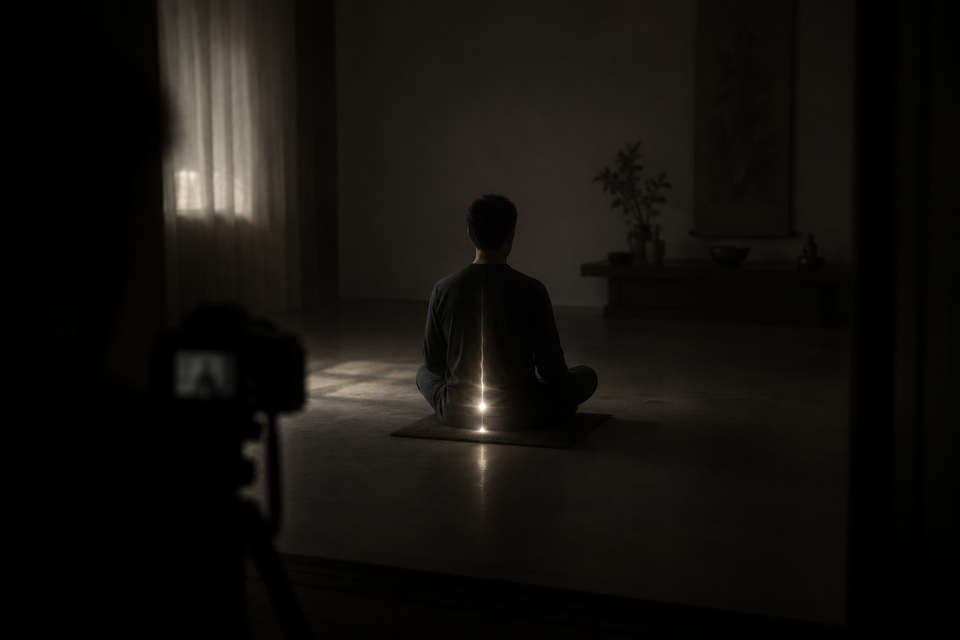
I considered the angle of view. The earnest amateur photographer inside me — always behind the lens, never in the frame — looked out at my body and mind from where the atma stands.
From that angle, I watched the white light begin to rise from the root chakra.
That’s when I felt the true meaning of drishta.
Part of The Witness, From the Inside — everything I have written about drishta, gathered in one place.
Member discussion