I Trained Him to Need Me
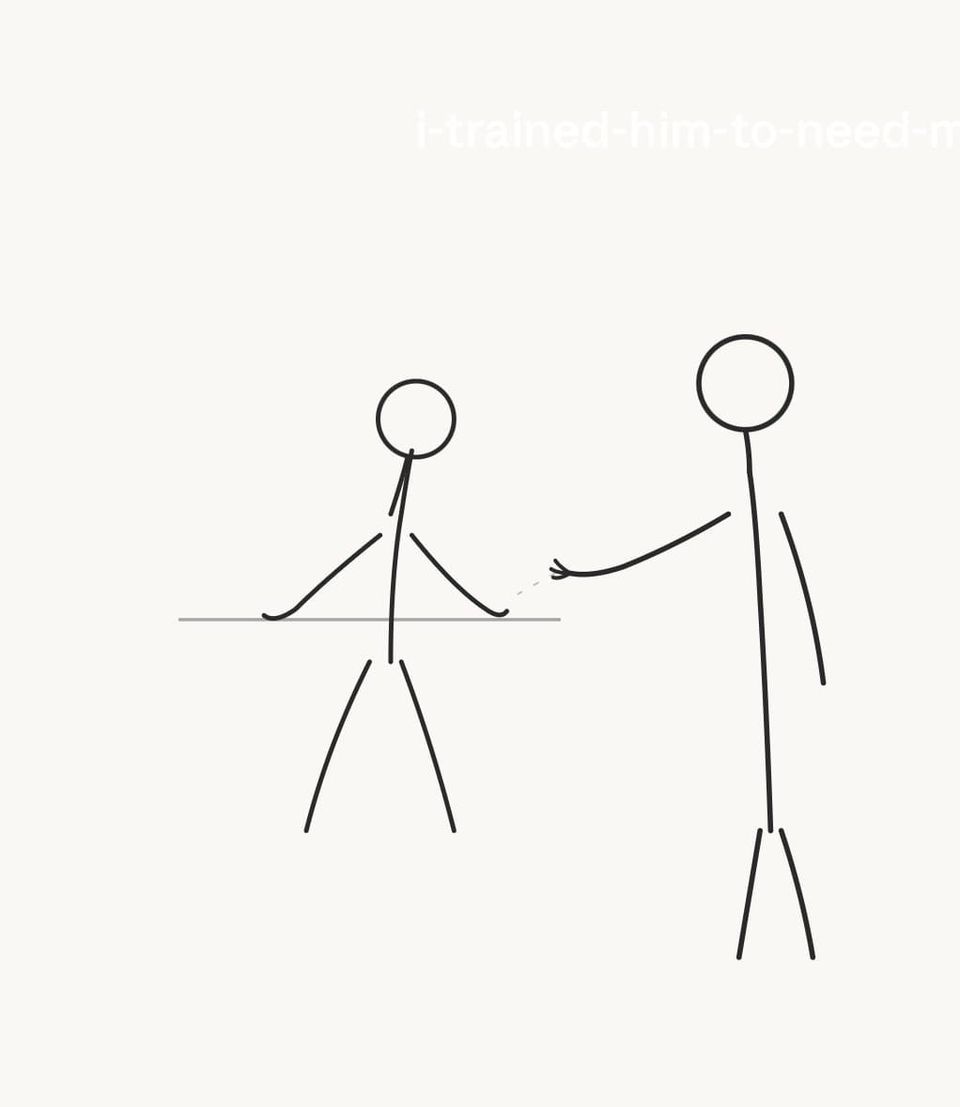
A young content creator joins the team. He is 21. Talented. Full of ideas. He walks in with proof of concepts, energy, and that restless hunger to create.
My job is simple. Mentor him. Help him settle. Show him the guardrails. Let him fly.
One month in, and he can’t take off without checking with me first. Every draft comes to me for confirmation. I explain. He fires back. I confirm. He moves. Then comes back again.
I’ve seen this before. Many times. Different people, different roles, same pattern. The person I mentor slowly stops thinking for themselves. And I tell myself — they need more time, more training, more handholding.
But today I stopped and asked a different question. Where am I wrong?
Not where is he lacking. Where am I creating the dependency?
Here’s what I think happened. I was supposed to mentor. Mentoring is guiding someone on how to think, how to structure, how to align ideas with requirements. A mentor doesn’t need to know the trade. A mentor knows the thinking.
But somewhere along the way, I slipped. From mentor to coach. A coach is someone who knows the sport. I don’t know content creation the way he does. I know structuring. I know thinking. I know how to take a scattered idea and turn it into an action plan.
And that’s exactly the trap. Because I’m good at structuring, I start structuring his work. Because I can see what’s missing, I point it out. Because I can see the gap between what he delivered and what’s needed, I fill it. First with suggestions. Then with edits. Then by doing it myself.
Lead by example, I tell myself. But leading by example in someone else’s craft is not leading. It is replacing.
This is not scalable. I know it. I’ve always known it. But knowing has never been enough to stop doing.
And that’s the real problem. Not him. Me.
I cannot sit with his incompleteness. The moment I see an unfinished thought, a weak draft, a wrong direction — something in me moves. Not to guide. To fix. There is a difference.
Guiding is pointing at the road. Fixing is picking him up and walking for him.
I think of Ashtavakra telling Janaka — you are not the doer. The kingdom runs. You watch. But Janaka was a king. He had the same compulsion. Everything around him needed his involvement. Every decision felt like it needed his hand. And Ashtavakra kept pulling him back. Not because action is wrong. But because the identity of “I am the one who must act” is the cage.
That identity has a name. Kartavyata. The compulsive sense of “I must do.” Not because the situation demands it. But because I cannot bear to watch someone struggle with something I can resolve in minutes.
That’s not mentorship. That’s my need wearing the mask of his development.
The confirmation loop he runs with me — draft, check, revise, check — I thought he built it. But I think I trained him into it. Every time he came with something incomplete and I completed it, I taught him one thing: don’t trust your own judgment. Come to me.
Sabri didn’t bite the berries for Rama. She bit them for herself. Her patience was her own sadhana. If someone had helped her pick the berries, sort the sweet ones, prepare the plate — she would have had nothing to offer when Rama finally came.
I think the pause I’m missing is not a big one. It is very small. It sits between the moment I see his unfinished work and the moment I open my mouth.
That pause. That tiny gap. That’s where his growth lives.
And I keep filling it with myself.
Member discussion