The Room That Did Nothing. And Everything.
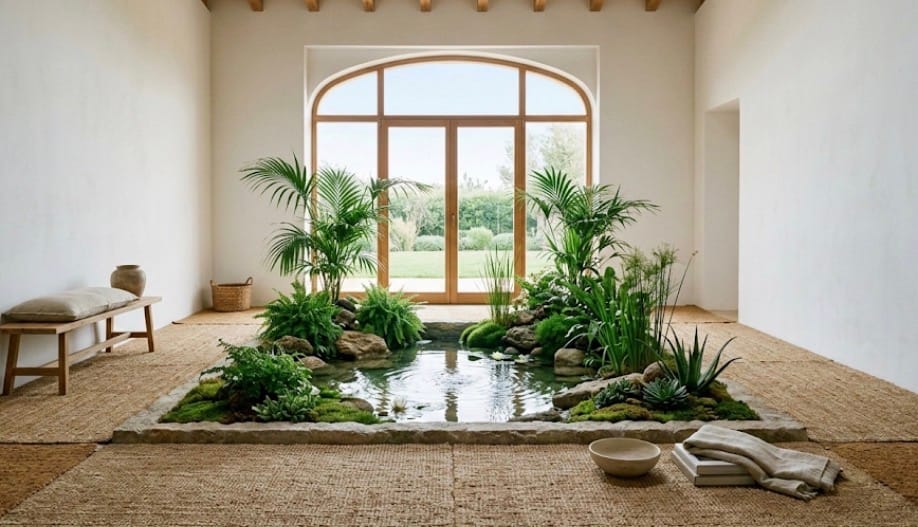
Somewhere in the city, there is a room.
No agenda. No instructor. No slides. No outcome metrics.
Just a mat. And thirty minutes.
A founder I know built this room. Called it Oasis. He told his managers — people spread across different parts of the city — to come here. Twice a month. Sit. Be quiet. That’s it.
HR tracks attendance. He usually isn’t there when they come.
When I first heard this, I thought — interesting. Maybe even admirable.
But sustainable?
The feedback was predictable. Some came because it was part of the job. Ticked the box. Left. Some pushed back. “Don’t enforce this on me.” A few took a religious angle. “I have my own practice.” Others said they already meditate at home. Why come here
Every response made complete sense. Because when something unfamiliar lands in a structured corporate life, the mind does what it does — it categorizes, resists, or complies without absorbing.
But the founder stayed quiet. Didn’t defend the idea. Didn’t call a meeting to explain the philosophy. Didn’t bring in a meditation teacher to make it more palatable.
He just kept the room open. And something began to shift. Slowly. Without announcement.
Most managers now say two words: “We like it.” Not — “it improved my productivity.” Not — “I feel 30% less stressed.” Just — we like it. That’s not a small thing. That’s the beginning of something real.
I have seen companies do this kind of thing. Wellness rooms. Mindfulness sessions. Breathing workshops. Lunch and learn on stress management.
Most miss one thing. They fill the silence. They bring an instructor. A framework. A playlist. A guided voice telling you when to inhale and when to let go. Which means — it’s still a task. Still something to perform correctly. The mind doesn’t rest. It just finds a new thing to follow.
Thehrav — the real pause — is not guided. It is allowed. There is a difference between a pause that is designed for you and a pause you discover for yourself. One is a product. The other is an experience.
Most of our workday runs on noise we don’t even notice anymore. The urgent message. The difficult colleague. The quarterly pressure. The face your boss made in that meeting. It all keeps moving — even after we leave the office. Even at dinner. Even at 2am.
That noise has momentum. It doesn’t stop just because you close your laptop.
The room doesn’t silence it. It gives the noise space to finish itself.
And in the gap after it finishes — without anyone planning it — something quieter arrives.
That quieter thing is what Ashtavakra calls the witness. Sakshi. The one who watches without adding to the noise.
Most of us live our entire corporate lives without meeting this version of ourselves.
There’s another layer here worth naming. Work relationships are changing. The old contract was simple — employer and employee. Task and reward. Performance and appraisal.
That contract still exists. But something else has entered.
People are no longer just asking what the job pays. They are asking what the job costs — in attention, in presence, in the parts of themselves they leave at the door every morning.
A manager who comes to Oasis twice a month is not just de-stressing.
She is — even if she can’t name it — beginning to notice the difference between herself and her role.
That noticing is not a productivity tool.
It is something more foundational.
It is the beginning of consciousness at work. And consciousness at work is rare. Genuinely rare.
I don’t know if the Oasis model will scale. I don’t know if other founders will have the patience to hold this quietly without turning it into a campaign.
Most won’t. Because the temptation to measure it is enormous. To show ROI on stillness. To get a consultant to optimize the thirty minutes. The moment you do that, the room becomes a program. And programs don’t create Thehrav.
They create compliance.
The real question this founder is sitting with — probably without framing it this way — is ancient.
Can you give people space without filling it? Can you trust that the pause itself will do the work?
It is the same patience that has no name in a corporate dictionary. But in the stories we grew up with, it does.
Sabri se sabra seekho.
Sabri didn’t know when Ram would come. She just kept the berries ready. Every day. For years.
The founder doesn’t know when his managers will cross from compliance to stillness. He just keeps the room open.
That is the practice. Not meditation. Not wellness. The practice is patience with the process.
Try this out in Move-See-Reflect framework :
The Room That Did Nothing. And Everything.
Move:
Go somewhere quiet. Not your home. Not your desk. A different space. Sit for twenty minutes without a phone, without a goal. Don’t try to meditate. Don’t try to think. Just let whatever is already moving — move.
See:
Notice when the urge to fill the silence arrives. The mental to-do list. The replaying of a conversation. Don’t fight it. Watch it. That watching — that slight distance between you and the thought — is Thehrav.
Reflect:
What came to you in that quiet that you couldn’t hear during the day?
Member discussion